
Semiconductors trade lower
Models become cheaper, faster, and smaller. Fortunately, there are other opportunities...

Michael Frazis
August 31, 2026
Dear investors and well-wishers
The fund declined 15.5% in July, largely due to a pullback in semiconductors, somewhat mitigated by holdings in software.
This pulled our 3 year net IRR back to 29% and our 7 year net IRR to 13%.
The semiconductor index has now retraced 21% since 1 June. We’ve closed a number of positions (Broadcom, Micron, AAOI, Marvell) and a number more are trading right above where our risk models would close our exposure entirely.
Nvidia posted an exceptional result last week, but real threats to both Nvidia and the semiconductor trade are materialising.
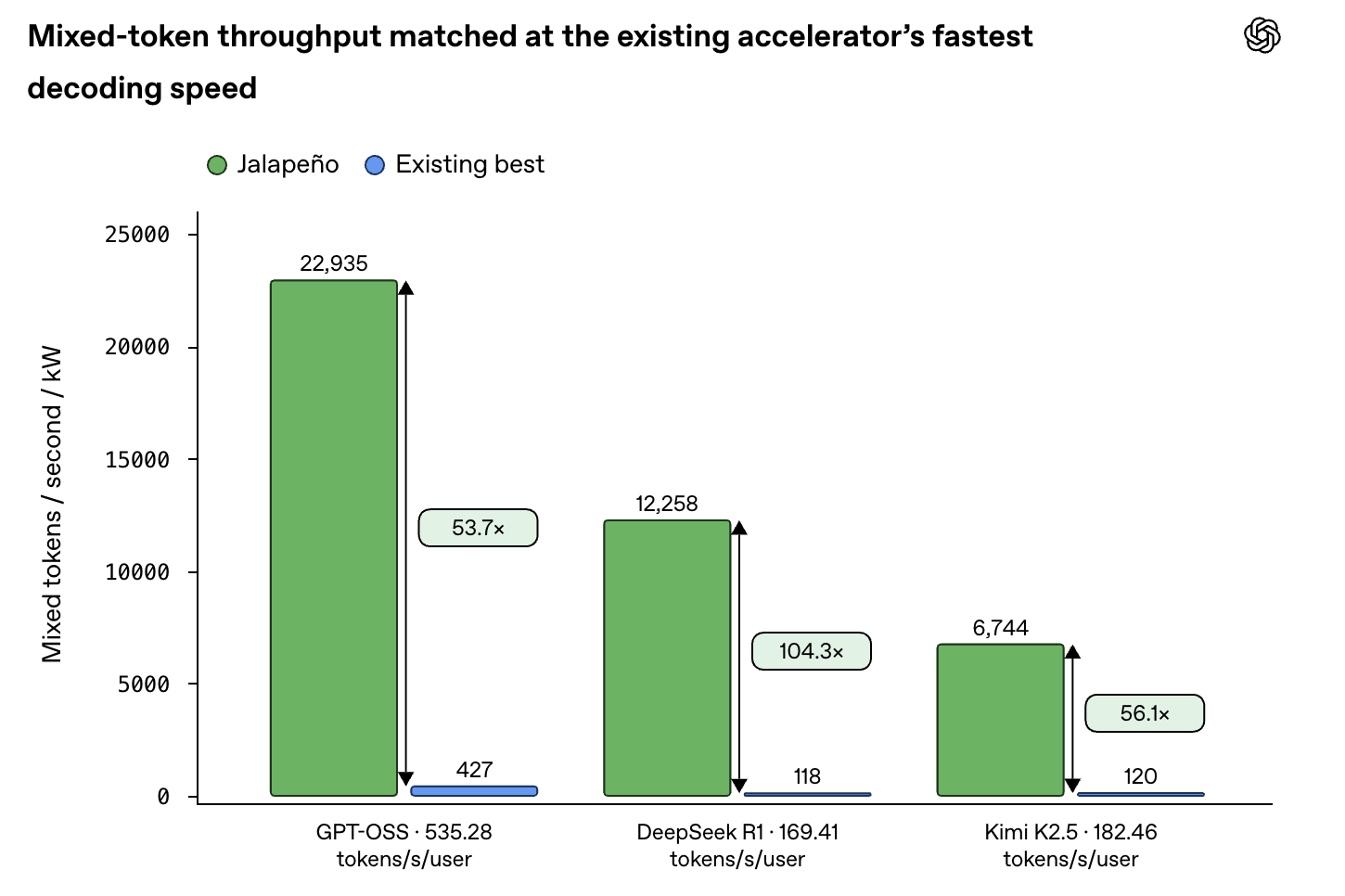
There are case by case issues, like the increasingly capable chips designed by hyperscalers, new entrants and even Open AI:


And every week seems to bring a new open-weight competitor that is more powerful, and runs on lower and lower spec hardward, to the point where near state-of-the-art intelligence is now accessible on a Macbook Pro.
Neoclouds and Anthropic/OpenAI account for nearly half of Nvidia’s revenue. And while hyperscaler demand seems solid in the near term, efforts to design internal chips and vertically integrate are showing real success and likely to take more and more market share (albeit in a fast-growing market).
For now, the question is still mostly around growth rates and trend, rather than whether they will keep spending.

Base Case
Our base case is that semiconductors will wax and wane over the next few years, with multiple sharp rallies and declines.
This is one of those interesitng periods where markets are digesting competing views:
Demand is exploding upwards, and this is likely to continue for the foreseeable future,
But new chip designs and models are dramatically increasing capabilities and efficiencies, so spend will increase at a much slower rate, and where this balances out is unclear.
Memory demand is sure to dramatically increase,
But there is already a supply response both from incumbents and new entrants (like the Chinese), and
There is also a demand response, as architectures are changing to become more efficient and higher prices have their usual effect.
OpenAI and Anthropic are clear leaders in top tier intelligence,
but a price war has already begun, adn they are already facing cheap competition from China and US competitors like Nvidia, who just made a $6 billion investment in open-weight competitor, and looks sure to double-down on their Nemotron class of open weight models.
There is also now a clear and present local threat, and while usability lags, it does show that there will always be a low cost, local alternative for any big spender.
Valuations are cheap, Nvidia is trading at a 2017 PE of 14x, for example,
But acompetition is increasing and margins are way above both a) historical norms and b) where they can be expected to settle long term
The investment boom is continuing… the richest companies and countries are borrowing to build datacenters and capacity as fast ast they can,
But there is some kind of limit here. Hyperscalers are moving in to cash-flow negative territory, and with the AI landscape changing every week there’s no guarantee where profits will ultimately land.
Bond markets too are signalling some kind of limit to the amount of capacity they can handle, as seen in rising rates and CDS spreads, even for Nvidia and the hyperscalers.
There are three clear options here from an investment perspective:
1) Become evangelical about AI and hold for the long term - but I don’t think there’s a single reader who forgets what happens to those that get too prophetic in financial markets. And if anyone forgot, the recent Leopold Aschenbrenner collapse should trigger memories. The laws of economics and financial gravity haven’t changed.
2) Ignore the AI trade entirely. It’s cyclical, and there are other opportunities, as the recent rally in software, e-commerce, and healthcare shows.
This is an entirely valid approach, especially now the ‘easy’ money in the trade has been made. Nothing in financial markets is really easy, but semiconductors repriced from a relatively niche but important industry to perhaps the most globally significant and the home of the largest capex buildout in history, certainly in dollar amounts. From here, it’s much more difficult.
3) Manage ther isks carefully, which is our chosen approach. While there will certainly be hiccups, our strategy at it’s core is a bet that there will be significant trends in the sector. And given the size of the flows in absolute and percentage (of global capital) terms, as well as the exceptional demand outlook, and cyclical nature of the sector, this is a fairly reasonable position, and our preferred way to play.
Other sectors
E-commerce is staging a steady recovery, with Nubank and Sea Ltd giving timely buy signals:

Companies like e.l.f have had strong recent rallies off the back of a significant drawdown and seem to be in the early stages of a recovery:

And software too has staged a comeback.
Salesforce posted a strong profit-driven earnings result and upgraded forecasts. We wrote previously that the SAAS sell-off was narrative driven, and for the bear case to play out we would have to see it in the numbers.
Well, it’s August, and the numbers coming in are strong:

This helped spark a rally in software stocks which have been building a base for multiple months now.
We have a number of positions in software but the benefit came mostly after the month end, and alas, we could have owned more. We missed Salesforce but own ServiceNow, Gitlab, Monday, Figma, and in Australia, TechnologyOne.
As the AI trade digests all these new developments, a focus for us now is to make sure we are evenly balanced between semiconductors, software, healthcare and other growth opportunities.
Outlook
We’re currently playing defence in semiconductors, and while we still have a large weighting, led by Nvidia which is our largest single stock holding, we are mostly waiting for a clear, measurable change in trend before loading back up.
The good news is the companies themselves are powering ahead, so the rebound when it comes will be strong.
Our strategy is designed specifically for this kind of cyclical, high return but high risk sector. The sector is down over 20%, and many small and mid cap companies down twice that, I’m sure that at some point in the next 6-12 months there will be another significant repricing, and it’s hard to imagine Nvidia trading at 14x next year.
So we are waiting for our structured, calculated re-entry points, and if this sell-off extends longer then we will close the remaining positions entirely, one by one.
I will be hosting an online update on Tuesday, 1 September at 10am AEST, so please register here and send through any questions before.
Michael